
During Canadian Infertility Awareness Week, researchers on the Patient Experience Research Team (Drs. Michelle Marcinow, Kristina Fuentes-Aiello, and Danielle Jacobson) at Trillium Health Partners’ Institute for Better Health are breaking the silence around infertility and pregnancy loss by building a new program of research grounded in lived experience.
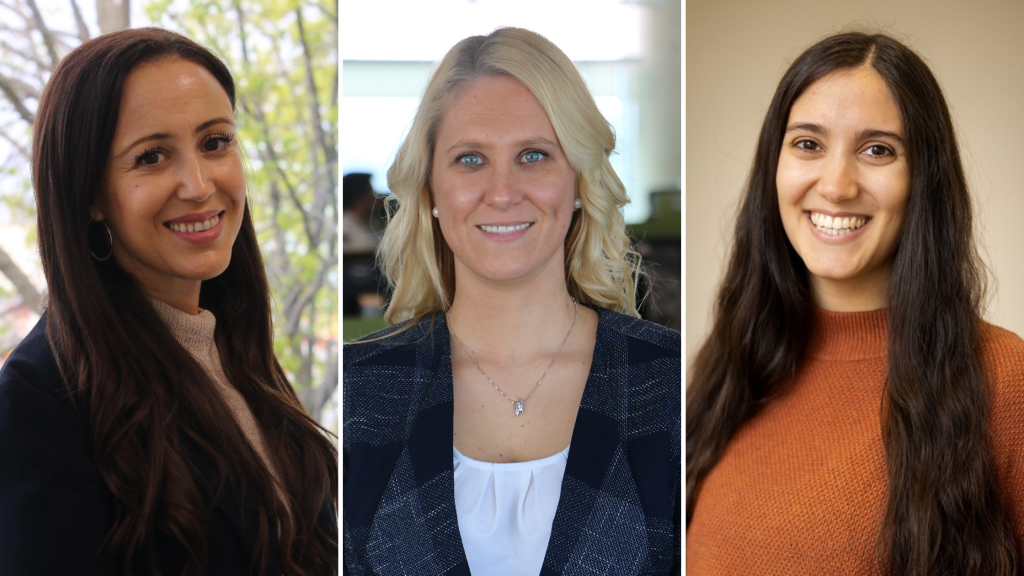
“This work evolved from candid conversations within our research team,” says Dr. Kristina Fuentes-Aiello, Research Associate. “By sharing our own experiences of infertility and pregnancy loss, we began to recognize how many common challenges we faced, and how often these experiences remain unspoken or are unacknowledged in the system.”
As team members reflected on their journeys, striking similarities emerged. These included navigating a complex health care system; advocating for care across multiple providers, services, and clinics; and frequently encountering stigma related to women’s health. Interactions often spanned health and social care systems that are fragmented, adding more burden to already difficult times. As these conversations expanded to include others with lived experience, it became increasingly clear that while many people want to speak openly about infertility, pregnancy loss, and their experiences navigating care, these experiences are still too often unheard.
Importantly, these experiences are far from isolated. The World Health Organization estimates that approximately one in six people of reproductive age worldwide experience infertility in their lifetime, underscoring the need for greater attention, research, and support. Yet despite the scale of the issue, there remains a significant gap in how these experiences are understood and acted upon.
“People want to talk about their experiences, but the system hasn’t always created the space for people to listen,” says Dr. Michelle Marcinow, Research Lead. “We see this work as an opportunity to change that, by intentionally creating space for lived experience to inform health and social care system improvements.”
In response, the team is seeking funding to bring together community members, researchers, and healthcare providers across disciplines to identify shared priorities and form a working group to guide this emerging program of research. This includes an application recently submitted to the Canadian Fertility and Andrology Society for a two-year community grant, with co-principal investigators Dr. Kerry Kuluski, Dr. Mathias Gysler Research Chair in Patient and Family-Centered Care at the Institute for Better Health and Aderemi Ejiwunmi, Vice President of the Shah Family Hospital for Women and Children at Trillium Health Partners, as well as plans to apply for a Canadian Institutes of Health Research planning grant.
Together, these efforts will support co-design and priority setting activities, beginning with a World Café that will provide a forum for sharing lived experiences, refining research priorities, and informing the next phase of this work. They will also help lay the foundation for a learning health system approach to fertility and reproductive care, in which patient, community, provider, and research perspectives continuously inform ongoing learning and improvement across the health system.
“By centering patient voices, we hope to create meaningful change in how care is designed and delivered at the future Shah Family Hospital for Women and Children, and more broadly,” says Dr. Danielle Jacobson, Research Associate.
“This work holds particular significance to my Research Chair, which was created to honour Dr. Matt Gysler’s legacy,” says Dr. Kuluski. “Dr. Gysler was a leading obstetrician, gynecologist, and fertility expert who spent his career supporting people in their fertility journeys. He was a trailblazer in person-centred care who truly honoured and supported the unique needs of patients and their families throughout their care journeys.”